
Hancock County Property Value Types
A Hancock County value search returns several numbers. West Virginia assesses property annually at 60% of true and actual value. The state interface adds appraisal parts and sale filters. A sale price records a past transaction. An assessment value supports taxation, so check the source and date before trusting any single amount.
| Value | What It Is | Where |
|---|---|---|
| Assessed value | Tax valuation generally set at 60% of market or true and actual value. | Assessor roll under WV law. |
| Market / true and actual value | Full-value basis described by state assessment law. | Assessment framework; not a sale offer. |
| Recorded sale consideration | Amount associated with a filed transfer, if available. | Deed or assessment sales information. |
| Land and building appraisal | Separate assessment components plus a total. | WV Property Assessment result. |
The 60% ratio explains the tax and market gap. It does not make the appraisal a buyer's price. A recorded sale may reflect conditions that no longer apply. The land and building split shows how the total is composed. Even so, each part remains an assessor figure. It is not a private appraisal.
West Virginia’s Hancock County Value Rule
West Virginia Code §11-3-1 sets the annual assessment date as July 1. Property is valued at 60% of true and actual value. Code §11-1A-3 defines assessed value as 60% of market value, subject to statutory exceptions. That is the rule to apply when reading a Hancock County value field. A recent sale may come in higher. That does not by itself prove an error in the tax value. Likewise, a low assessment does not prove the parcel would sell for that figure.
Assessment is a mass valuation process across the county. It is not a bespoke opinion for one buyer or seller. The state assessment portal displays land, building and total appraisal fields. It also offers filters for minimum and maximum values. Use those fields to compare records consistently. They are not a substitute for an appraiser's review of condition, improvements or market factors.
- Assessed value
- The figure used under tax assessment law.
- Market value
- The full-value basis, not a guaranteed transaction price.
- Assessment ratio
- The 60% relationship between assessed and market or true actual value in state law.
- Sale consideration
- The amount associated with a recorded transfer, with its own date and terms.
Hancock County’s July Assessment Date
The assessment date falls on July 1 each year under the state rule. West Virginia's §11-1C-9 maintenance process runs in repeating three-year cycles. Field visits and adjustments handle changes that affect value. They cover different parts of the work. A property can change after July 1 through a sale, renovation, demolition, or parcel split. The assessor publishes no parcel-specific value history. Match the year on the current record to the deed or improvement evidence. Check the plat as well. Never infer a new value from an older sale or a GIS polygon. Open the WV Property Assessment page for Hancock parcels.
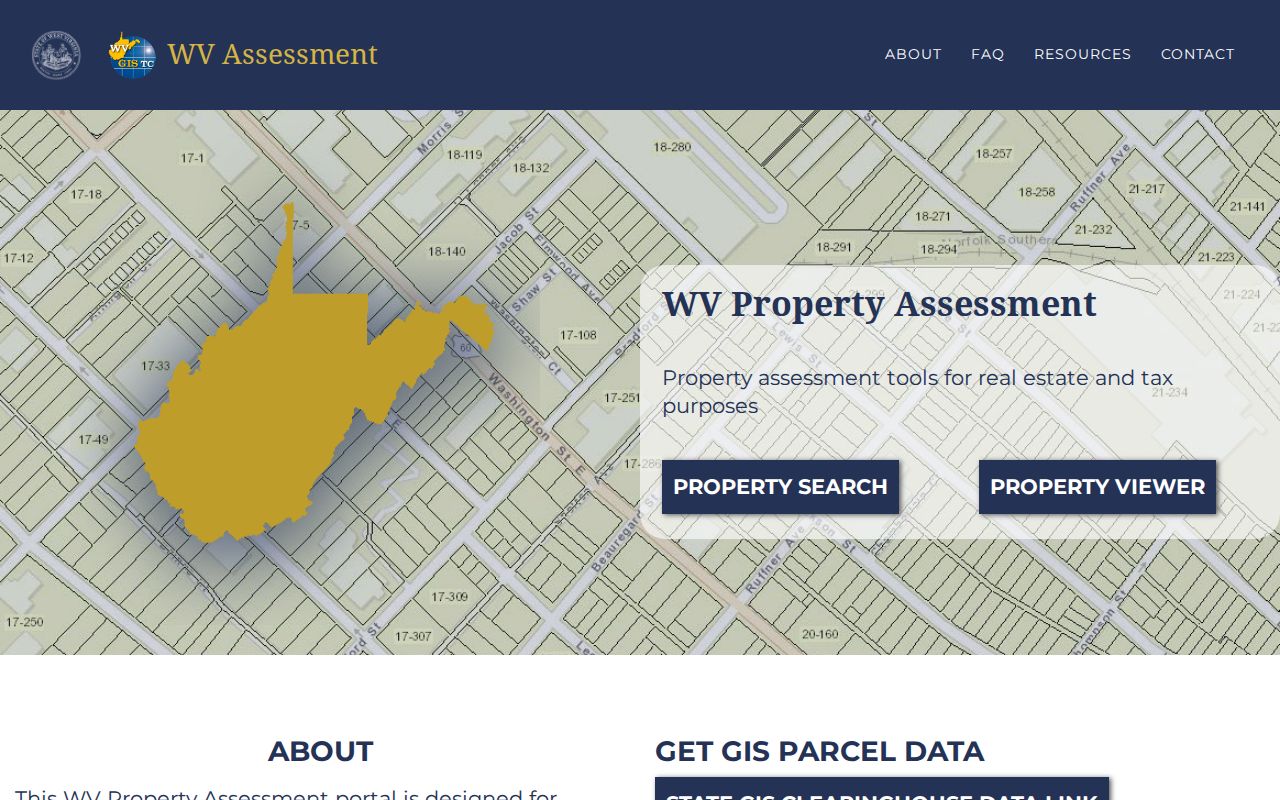
The image documents the portal route, not a particular parcel’s value history.
Finding a Hancock County Property Value
Search the Hancock County assessor by street, owner, full parcel ID, map number, parcel, or subparcel. Open the matching row. Read the building, land, and total appraisal fields together with Current Owner and Property Address. Save the parcel key and query URL so another value is not mistaken for the subject lot. The search also filters sale dates, price, and acreage. Treat those as research filters, not a valuation tool.
- Search the address or parcel in WV Property Assessment.
- Check that the situs, owner and parcel identifiers match the land.
- Note building, land and total appraisal fields and the current assessment year.
- For a transaction amount, find the recorded deed or sale information and note its date.
- Compare the sources by purpose instead of treating each number as a current market quote.
- Land appraisal
- Value shown for the land component.
- Building appraisal
- Value shown for improvements.
- Total appraisal
- The displayed total of appraisal components.
Hancock County Sale Price and Assessor Value
A recorded sale price attaches to one dated transaction. The assessor's appraisal fields describe the roll's valuation, with their own date and method. The WV search offers sale-from and sale-through filters plus minimum and maximum price fields. Check the deed for the filed conveyance. Note that not every result carries a sale value. A sale and an assessment can disagree. Confirm the same parcel and time period first. Check for a split, a lot description, or a mailing-address mismatch. Then separate transaction context from tax valuation. A purchase price can reflect condition or terms. Mass appraisal does not mirror those in the same year.
Recent Hancock County Parcel Changes
Recent splits can lag on the map. The state warns that new lines wait for county submission and the annual update to statewide tax-map products. That lag can skew a value comparison after a division or purchase. If the map looks old, check the deed and plat. Then ask the Assessor whether the new parcel record was submitted. An absent map line never means a zero value. For a complex parcel, keep the root parcel ID, district, map, parcel, subparcel, and legal description together. Keep the legal description with it. The map is only a location aid. The assessor result carries value fields, and the recorded instrument carries the transaction description. Use each source for its own claim. Bill and appeal questions belong in the Hancock County property tax records route.
Limits of a Hancock County Property Value
The assessor's number is a tax valuation. It is not an appraisal for a loan, sale, or negotiation. A Hancock County property value reflects a set assessment date, a defined method, and parcel details recorded by the state, so it can sit well above or below what a buyer actually pays in the open market. Sales context drives market price. The assessment rolls carry no parcel-level history graph or value trend for any incorporated city, so a single figure is all the tax record offers on its face.
Value vs price. The assessed value supports taxation and is not what the parcel will necessarily sell for. For a sale-specific opinion, consult a qualified appraiser.
Compare Assessment Figures With Their Dates
When reviewing values, keep the tax year, assessment date and property identifier beside every figure you record. West Virginia assesses property annually as of July 1 at 60 percent of true and actual value, and the state's appraisal work runs on a three-year cycle. That means the annual tax record and an owner's idea of current market price answer different questions. A value shown in the state portal is a county assessment input, not a promise about the amount a buyer would pay today.
The assessment result may list land, building and total appraisal separately, along with deeded acreage, property class, land use, tax class and available sale information. Check the components before comparing two parcels. A low total might reflect vacant land, a smaller improvement or a different classification rather than a comparable home selling for less. If the search offers sale-date and sale-price filters, use them to find a transaction record, then confirm the instrument and terms with the deed rather than treating one sale as a complete valuation study.
For a possible error, gather the parcel ID, assessment notice, relevant sale evidence and a concise explanation of the disputed land or building figure. State law provides a Board of Review and Equalization process, but the precise local calendar and form were not captured in the research. Contact the Assessor promptly after receiving the notice to confirm the applicable deadline and filing procedure. Do not rely on a general annual date when the county has not published it in the material used for this guide.
A recent split, combination, construction change or corrected description can also complicate a year-to-year comparison. The map and roll may not incorporate a new line on the same schedule as a recorded deed. Verify that both values refer to the same current parcel and that the acreage and improvements have not changed. If the assessment is wrong, ask how to present supporting evidence; if the question is market price, seek a qualified appraisal or comparable-sales analysis.