
Reading Hancock County Tax Records
Two questions drive most tax lookups here. One is how a parcel is valued. The other is what has been billed and whether the ticket is settled. The Assessor maintains the parcel and appraisal side of that divide, while the Sheriff's Tax Office owns payment and status. A record in one system never replaces the other. Match entries by district, map, parcel and subparcel before assuming two lines describe the same piece of Hancock County land.
| Field | What It Shows | Where |
|---|---|---|
| Land, building and total appraisal | Value components shown on the assessment result. | Assessor / WV Property Assessment |
| Assessed value | Tax value generally set at 60% of market or true and actual value. | Assessor roll |
| Parcel identifiers | District, map, parcel and subparcel keys. | Assessor and Sheriff’s Tax Office |
| Tax year and ticket | Tax account, year, ticket and suffix search clues. | Sheriff’s Tax Office |
| Paid / unpaid status | Payment status for a ticket. | Sheriff’s Tax Office portal |
West Virginia assesses property each July 1. The assessed figure is set at 60 percent of true and actual value. That makes it a tax measure. A sheriff ticket tells a different story. It shows the tax bill and its payment status. A recorded deed may state what a parcel actually sold for. None of these numbers is interchangeable. None estimates what the parcel would fetch on the market today.
Hancock County’s Sixty Percent Assessment
West Virginia Code §11-3-1 provides for assessment each year as of July 1 at 60% of true and actual value. Section 11-1A-3 defines assessed value as 60% of market value, subject to statutory exceptions. That statewide rule is the right starting point when a Hancock County result shows appraisal components beside an assessed figure. The displayed total is not a market offer, a lender appraisal or a quote from a buyer.
The state describes its valuation system as a repeating three-year cycle under §11-1C-9, with visits and adjustments for changes that affect value. This helps explain why a parcel can have a recent sale price and a different assessment. Annual assessment and a multi-year maintenance cycle are not contradictory: the date is annual, while valuation work is organized across cycles.
The WV Property Assessment landing page links to the search, viewer and tax-map products. Its annual coordination with the State Tax Office is also why recent map changes may take time to show statewide.
Open the state assessment portal used for Hancock County property records.
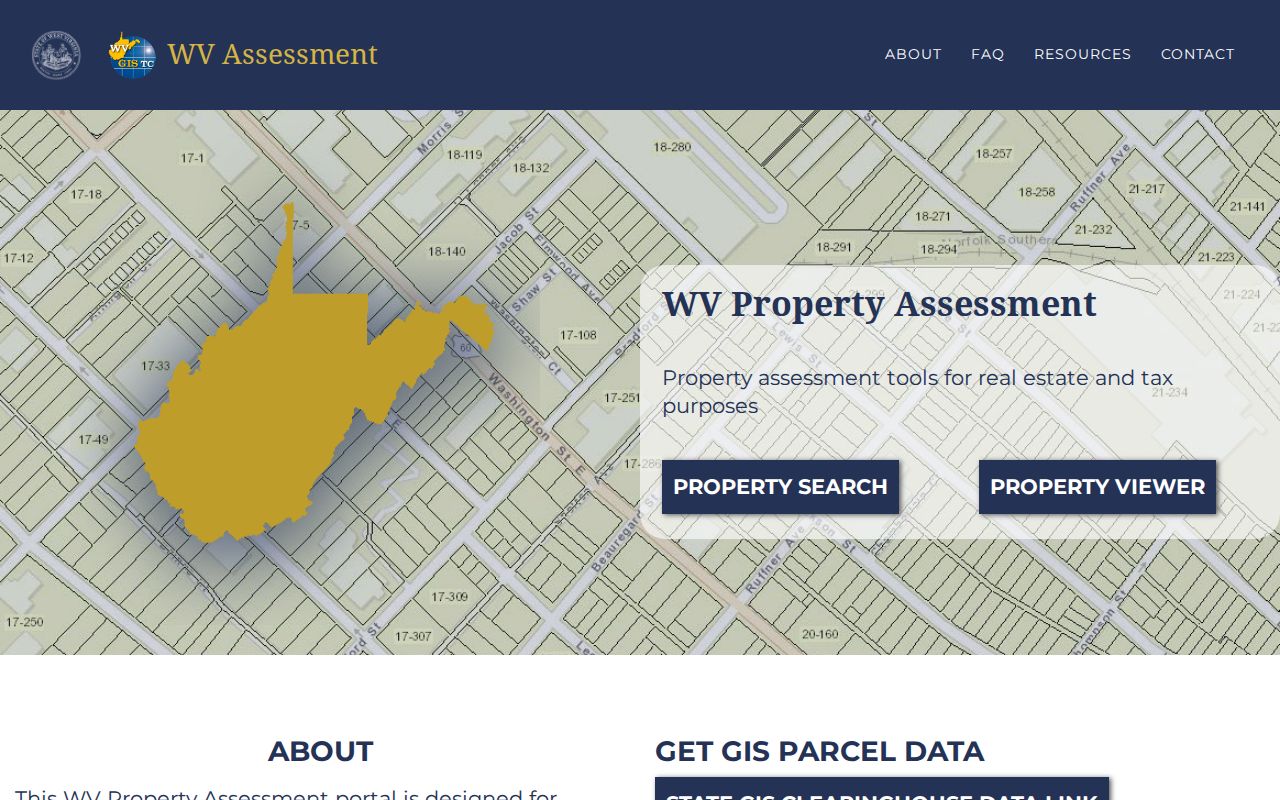
Start with the current parcel record. Read the value fields there first. Then pull the tax ticket for the amount actually billed.
Hancock County Exemption Details
No complete Hancock-specific exemption list appears among the county's published materials. There is no application form or eligibility schedule either. An exemption shown on another West Virginia county's page may not apply here. It may not fit the same parcel or owner. Ask the Assessor which current form and evidence are required. Then compare the answer against the value and classification on the official roll.
When reviewing any tax record, keep the assessed value separate from any taxable amount. The taxable amount reflects a lawful adjustment. A name on the roll, a mailing address and an exemption status are not substitutes for the actual account. The county's 2026 personal-property filing notice is its own task. It does not serve as a title search or replace a real-property assessment review.
- Assessed value
- The taxable valuation set under state assessment rules.
- Tax ticket
- The Sheriff’s Tax Office record for a bill and its payment status.
- Tax lien
- A claim connected to unpaid taxes; check the tax account, recorded filings and sale process.
Finding a Hancock County Tax Ticket
The Sheriff's Tax Office portal keeps ticket lookup apart from the assessment search. Its routes include taxpayer name, account number, tax year with ticket and suffix, or the full district-map-parcel-subparcel sequence. Filters cover real or personal property and paid or unpaid status. The portal also takes online tax payment. Turn to the ticket system for bill-status questions. Turn to the assessor for appraisal and parcel fields.
- Open the Sheriff’s Tax Office portal and select the search route that matches the information in hand.
- Enter the taxpayer name, account, year/ticket/suffix, or all available parcel components.
- Check whether the ticket is paid or unpaid and confirm the tax year.
- Use the assessor result separately for appraisal or parcel classification details.
- If a sale is involved, read the sheriff’s notice and confirm later court and clerk records.
- Assessed value
- The value set for tax purposes under state law.
- Market value
- The market or true-and-actual value basis, distinct from the 60% assessment figure.
- Paid / unpaid
- The ticket status displayed by the sheriff portal.
- Tax lien
- A recorded or tax-account claim that needs review with its release or sale history.
Hancock County Ticket Search Keys
The sheriff search fields rescue a lookup when an address fails. A taxpayer account number or a year-and-ticket reference can pin down the bill directly. With only a map key in hand, enter the district and the subparcel. Do not enter a shortened number. A first-and-last taxpayer name format is supported. Names can still differ between the assessor roll and the tax account, so cross-check carefully.
| Taxpayer | Name search, listed as last name then first name. |
|---|---|
| Account | Taxpayer account number. |
| Ticket | Tax year, ticket number and suffix. |
| Parcel key | District, map, parcel and subparcel. |
| Filters | Tax year, real or personal property, paid or unpaid. |
Online payment is convenient. Save the ticket number and payment confirmation anyway. The property address is not the only way into the system, and a payment search should never be read as proof of title or a complete lien release.
Hancock County Tax Sale Records
The Sheriff's sale page posts current ready-to-sell and sold files. Annual PDFs run from 2014 through 2025. A buyer must check the live notice, because the list changes as sales are scheduled. The page requires a deposit by 3 p.m. on sale day. Pay by certified bank check, cash, or money order. Make it payable to the Hancock County Sheriff's Office.
Deposits follow a published scale. They are $2,000 for appraisals up to $10,000, $5,000 above that through $200,000, and $10,000 above $200,000. The page also warns that a buyer may owe taxes due through confirmation. A tax ticket is not a deed. An offered parcel is not proof that title vested. Verify the sale status, the court confirmation and any recorded follow-up instrument.
Review the current Hancock County Sheriff's sale list and annual PDFs.
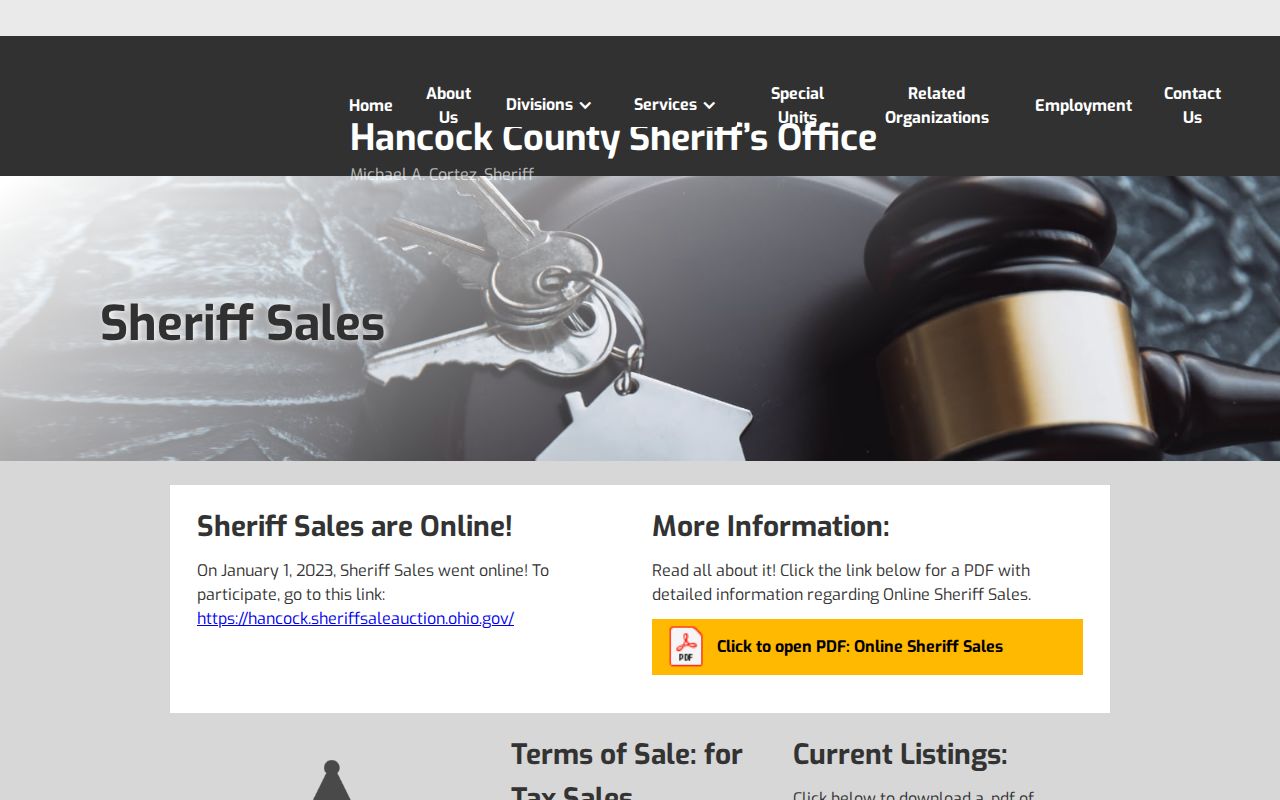
Confirm the status and any deed or court order.
Reviewing a Hancock County Assessment
Start with the assessor's notice. Pull the matching land book entry. Compare the situs, parcel description, owner name and appraisal parts against the property facts. A recent recorded transfer helps too. If a name, description or valuation looks wrong, contact the Assessor first. West Virginia law gives each county a Board of Equalization and Review to correct names, descriptions and valuations, and it requires notice when a value rises.
The county publishes no current hearing calendar or local appeal form online. Rely on the notice for the year at issue. Confirm the filing window with the Assessor. Evidence must fit the question raised. A sale price, improvement record or map can add context, but procedure and deadlines come from the current county notice.
West Virginia Code §11-3-24 sets out equalization and review corrections and the required notice provisions.
Read the state statute with the county's annual notice.
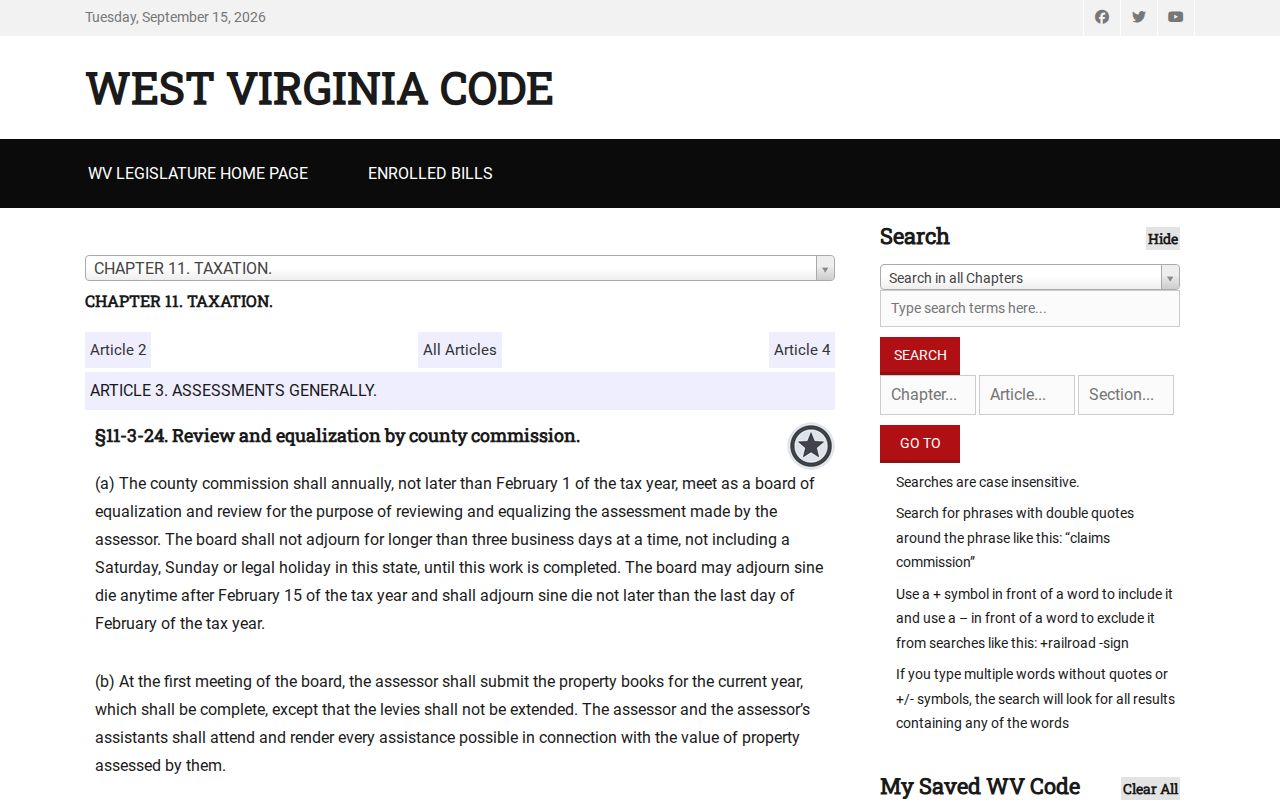
Trust only the county's current notice for appeal dates.
Separating Hancock County Values and Bills
Keep the columns straight. The assessor appraisal, assessed value, tax bill, payment status and sale notice each answer a different question. The assessor's July 1 valuation speaks to property value. The Sheriff's Tax Office shows a ticket for one year and whether it is paid. A sale PDF marks a process step. It does not establish final title. A deed or court order settles a different question.
West Virginia law sets a clear value ratio. Hancock County publishes no levy breakdown by taxing district. So never calculate a bill from a sample appraisal without the current levy and account details. For an ownership confirmation, the most recent recorded deed controls; for a boundary, the map is reference only, and a licensed surveyor handles location evidence.
Appeal window. Hancock’s current local hearing date was not exposed in the captured source. Check the Assessor’s annual notice and confirm the filing window with the county before relying on a deadline.
Read a Tax Result as a Ticket for One Year
The Sheriff's Tax Office portal is built around a taxpayer, account or tax ticket rather than a deed chain. Search by taxpayer name in last-name, first-name order. Account number, tax year, ticket and suffix also work. District, map, parcel and subparcel fields offer another route. If one search returns several rows, add the tax year and account details from a prior bill before selecting a ticket. The portal also offers real or personal property filters plus paid and unpaid filters.
Keep the tax year attached to any amount or status you note. A paid ticket shows that year's charge as paid. It does not prove the billed owner still holds title. A tax sale file is a separate record again. The Sheriff posts current and annual sale PDFs. The archive runs from 2014 through 2025. Check sale terms, deposits and possible taxes due through confirmation against the current notice. A static page cannot confirm a live sale.
The account or parcel may not match the address. Compare the bill's district and parcel fields with the assessor roll and map. A split, combination or new assessment identifier can make an address search miss an older ticket. Ask the Sheriff Tax Office about the ticket year and suffix. Then have the Assessor confirm the parcel relationship. That cross-check keeps each tax status attached to the right property and period.